
Open mesh fabrics are essential across many industries, including agriculture, construction, filtration, packaging, and technical textiles. While these fabrics must allow airflow, light penetration, and drainage, they must also maintain structural integrity under tension and environmental stress.
One of the most effective ways to achieve this balance is through leno weaving — a unique fabric structure known for its stability and durability.
This article explains why leno weaving is the preferred structure for strong and reliable net fabrics.
Understanding the Challenge of Open Mesh Fabrics
Producing open-structure fabrics presents a technical challenge. As the spacing between yarns increases, fabrics become more prone to:
-
yarn slippage
-
distortion under tension
-
uneven mesh openings
-
reduced tear resistance
-
deformation during installation
To prevent these issues, the fabric structure must lock yarns securely while maintaining openness.
What is Leno Weaves Structure?
Leno weaving differs from traditional weaving structures.
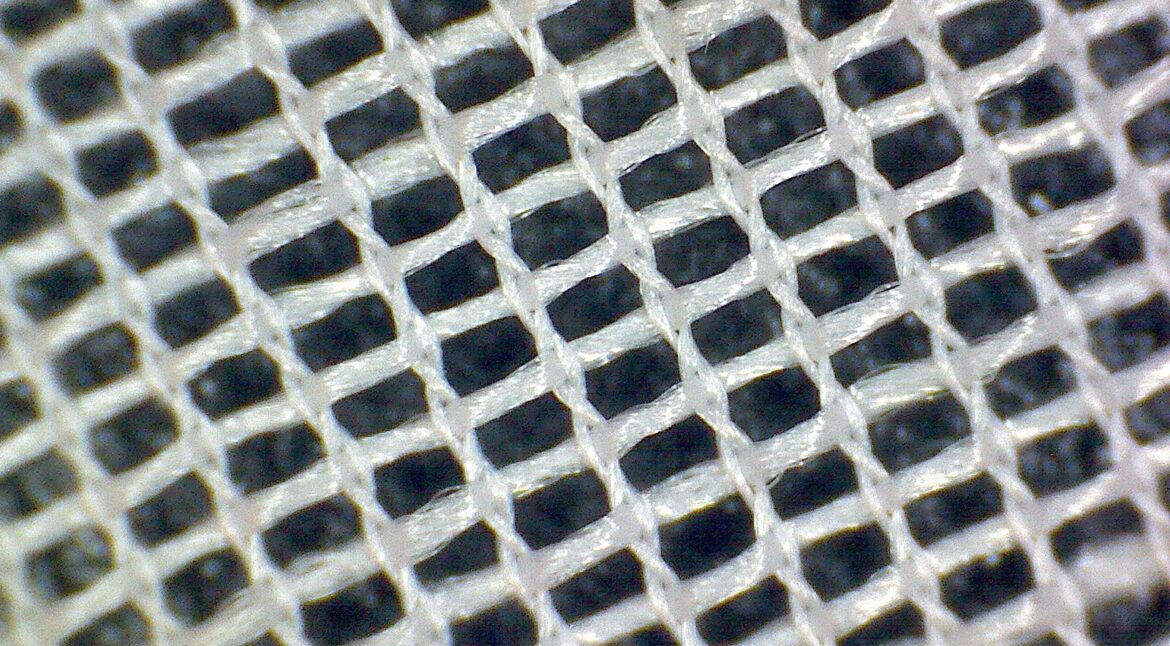
Instead of parallel warp yarns interlacing normally with the weft, pairs of warp yarns twist around the weft yarn, locking it firmly in place.
This crossing motion stabilizes the fabric and prevents yarn displacement.
Key structural characteristics:
✔ warp yarns cross and lock the weft
✔ mesh openings remain uniform
✔ yarn movement is restricted
✔ structure resists distortion
This makes leno weaving ideal for open fabrics requiring long-term stability.
Leno Weave vs Plain Weave Nets
Plain weave can produce open fabrics, but as spacing increases, stability decreases.
Plain weave limitations:
-
yarns can shift under tension
-
mesh openings distort
-
fabric loses shape over time
Leno weave advantages:
✔ locks yarns in position
✔ maintains consistent openings
✔ improves dimensional stability
✔ resists deformation
For applications where durability and shape retention are critical, leno weave provides clear benefits.
Leno Weave vs Knitted Net Structures
Knitted nets offer flexibility and elasticity, but they may not provide the rigidity required for certain applications.
Knitted nets characteristics:
-
flexible and stretchable
-
adaptable to irregular shapes
-
less dimensional stability under tension
Leno woven nets characteristics:
✔ superior dimensional stability
✔ high tensile strength
✔ minimal stretching
✔ consistent mesh geometry
For protective nets, reinforcement meshes, and technical fabrics, woven leno structures often provide better performance.
Performance Advantages of Leno Net Fabrics
✔ Dimensional Stability
Warp crossing locks the structure, preventing deformation.
✔ Enhanced Tear Resistance
Locked yarns distribute stress more evenly.
✔ Uniform Mesh Geometry
Ensures reliable airflow, filtration, or shading performance.
✔ Lightweight Strength
Allows larger openings while maintaining durability.
✔ Resistance to Mechanical Stress
Maintains structure during installation and long-term use.
Applications That Benefit from Leno Structures
Leno woven nets are widely used in:
Agriculture
-
anti-hail nets
-
insect protection nets
-
shading fabrics
Construction & Geotextiles
-
erosion control meshes
-
reinforcement grids
Industrial & Technical Uses
-
filtration fabrics
-
reinforcement scrims
-
protective mesh materials
Packaging & Logistics
-
protective netting
-
ventilation mesh fabrics
These applications require consistent openings and structural stability — key strengths of leno weaving.
Enhancing Production with Leno Systems on Dobby Looms
Modern leno systems allow dobby looms to produce open mesh fabrics efficiently.
This provides manufacturers with:
✔ stable net structures
✔ adjustable mesh sizes
✔ reduced yarn consumption
✔ expanded product capability
By integrating leno weaving technology, producers can manufacture high-performance net fabrics without investing in specialized machinery.
conclusión
When producing open mesh fabrics, structure determines performance. Leno weaving provides the stability, strength, and durability required for demanding applications while maintaining the openness essential to net fabrics.
For manufacturers seeking reliable, high-performance mesh textiles, leno weave remains one of the most effective and versatile fabric structures available.
 English
  Turkish
  Spanish