

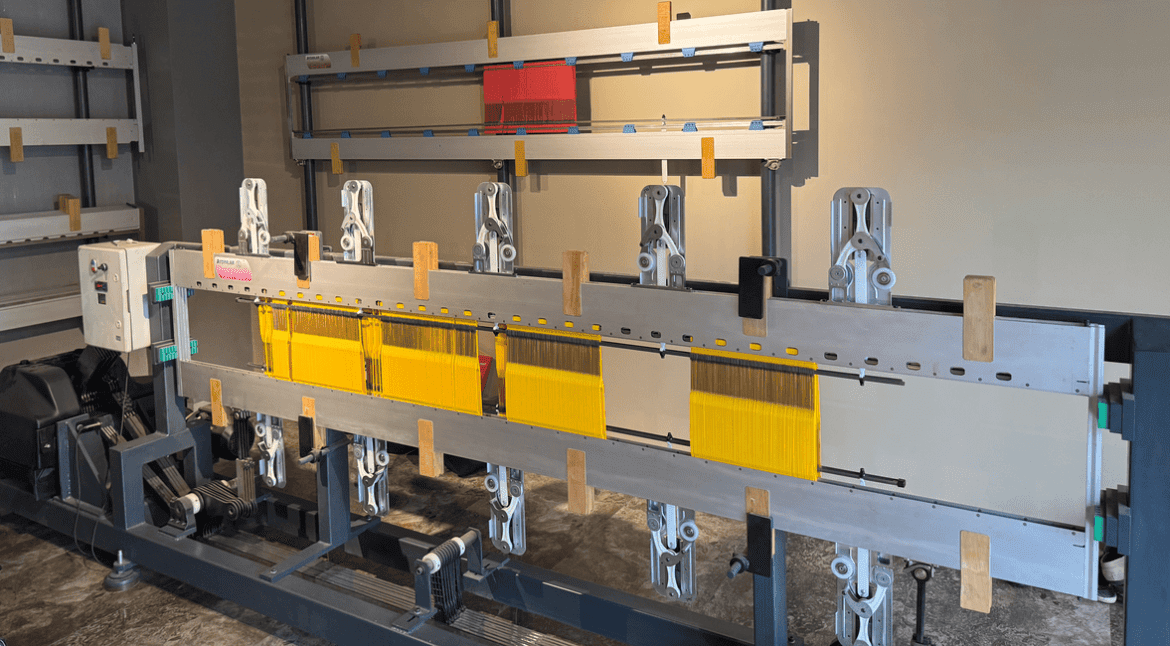
As demand grows for net fabrics and open-mesh textiles in agriculture, construction, and technical applications, many weaving mills are looking for ways to expand production without investing in new machinery.
One of the most efficient solutions is converting an existing dobby loom to produce leno fabrics. With the right leno system, manufacturers can produce stable mesh structures, agricultural nets, and technical open fabrics using their current equipment.
This guide explains how the conversion works and what to consider when upgrading your loom.
Why Convert a Dobby Loom to Leno Weaving?
Upgrading to leno weaving allows manufacturers to:
✔ produce stable mesh and net fabrics
✔ expand into agricultural and technical textile markets
✔ reduce investment compared to new machinery
✔ maintain flexibility for standard fabrics
✔ improve fabric strength and dimensional stability
This conversion enables new product capabilities while maximizing existing assets.
What a Leno System Adds to Your Loom
A leno system creates the crossing motion required to twist warp yarns around the weft, locking the structure and forming stable mesh openings.
A complete system typically includes:
-
leno devices (upper and lower units)
-
specialized healds for warp crossing
-
support bars and mounting components
-
optimized frame configuration
These components work together to create consistent and durable open structures.
Standard Configuration for Wide Looms (3.0 m – 3.8 m)
For wider machines, a typical configuration includes:
-
8 frames
-
24 leno devices
-
12 upper
-
12 lower
-
-
6,400 knitting healds
-
metal support bar system
This setup provides precise warp crossing and consistent mesh formation across wide working widths.
Configuration for Medium Width Looms (1.90 m – 3.0 m)
For smaller working widths, the system is scaled accordingly:
-
18 leno devices
-
4,800 knitting healds
This configuration maintains optimal performance while matching the loom width and production needs.
Knitting Heald Options
Two knitting heald sizes are available to suit different yarn types and fabric structures:
✔ 2.04 mm
Recommended for stronger yarns and heavier net structures.
✔ 1.40 mm
Ideal for finer yarns and lighter mesh fabrics.
Selecting the correct heald size ensures smooth yarn movement and optimal fabric performance.
Using Your Existing Frames
Manufacturers may choose between:
✔ Complete frame supply
Ready-to-install frames designed for leno operation.
✔ Using existing machine frames
If you prefer to use your own frames, they can be adapted for the leno system.
This requires:
-
precision drilling
-
device positioning based on loom width
-
configuration according to machine model
Proper installation ensures reliable device alignment and long-term performance.
Loom Compatibility & Operating Speeds
Rapier Looms
Typical operating speeds:
250 – 350 rpm
Airjet Looms
Typical operating speeds:
450 – 550 rpm
These speeds allow stable leno formation while maintaining efficient production.
Important Compatibility Note
Leno systems are not compatible with water jet looms due to the operational and structural differences in the weaving process.
Applications After Conversion
Once upgraded, a dobby loom can produce:
-
agricultural protection nets
-
insect and shading nets
-
technical mesh fabrics
-
reinforcement scrims
-
geotextile meshes
-
industrial open structures
Mesh size and structure can be adjusted to meet specific application requirements.
Key Benefits of Converting Your Loom
✔ expand product range
✔ reduce capital investment
✔ produce high-stability mesh fabrics
✔ improve material efficiency
✔ access growing technical textile markets
This upgrade transforms a conventional loom into a versatile production system.
conclusión
Modifying a dobby loom with a leno system is a practical and cost-effective way to enter the growing market for net and mesh fabrics. With the correct configuration and installation, manufacturers can achieve stable, high-performance open structures while maintaining production flexibility.
For weaving mills seeking diversification and new market opportunities, leno conversion offers a powerful path forward.


 English
  Turkish
  Spanish