
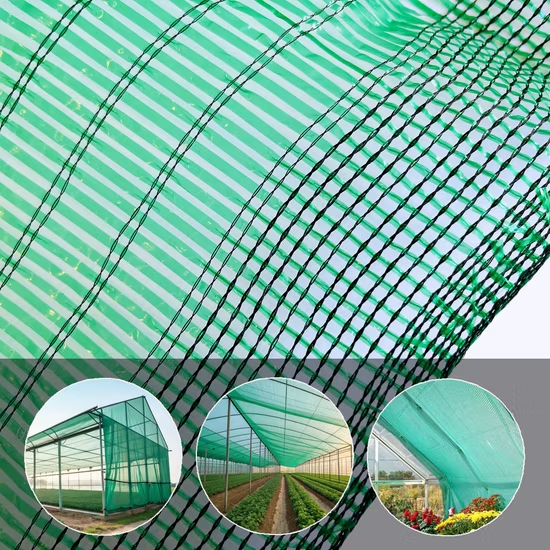
Agricultural protection nets are becoming essential worldwide. From protecting crops against hail and insects to optimizing shading and airflow, these technical fabrics help farmers increase productivity while reducing environmental impact.
Traditionally, many of these nets are produced using Raschel knitting machines or extrusion processes. However, weaving mills are increasingly discovering that dobby looms equipped with leno weaving systems can produce strong, stable, and high-performance net fabrics — without investing in new machinery.
This article explains how.
The Growing Demand for Agricultural Nets
Modern agriculture faces increasing challenges:
-
extreme weather events such as hail and frost
-
pest control without chemical overuse
-
water conservation and microclimate control
-
crop protection for higher yields
As a result, demand is rising for:
✔ anti-hail nets
✔ anti-insect nets
✔ shade nets
✔ wind protection nets
✔ crop support meshes
For textile producers, this represents a rapidly expanding market opportunity.
What Makes a Good Agricultural Net?
Agricultural nets must combine openness with structural stability. The key requirements include:
✔ Controlled mesh openings
Allows airflow, light control, and pest exclusion.
✔ High dimensional stability
Prevents deformation during installation and use.
✔ Durability & weather resistance
Nets must withstand wind, sun exposure, and mechanical stress.
✔ Lightweight structure
Reduces material usage and simplifies installation.
Meeting these requirements depends heavily on fabric structure.
Why Leno Weave is Ideal for Net Fabrics
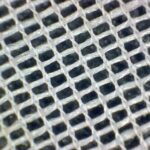
Leno weaving creates open mesh fabrics by twisting warp yarns around the weft, locking the yarns in place and preventing slippage.
Key advantages of leno weave:
✔ prevents yarn shifting and distortion
✔ maintains consistent mesh openings
✔ improves tear resistance
✔ increases fabric stability under tension
✔ enables lightweight yet strong structures
Compared with plain weave nets, leno fabrics remain stable even with larger openings.
Producing Nets on a Dobby Loom
Many weaving mills assume that net fabrics require specialized knitting machinery. In reality, a dobby loom equipped with a leno system can produce a wide range of mesh structures.
How it works:
-
The leno device twists selected warp yarns.
-
The crossing motion locks the weft in position.
-
Open mesh structures are created with high stability.
-
Mesh size can be adjusted through design settings.
This allows production of different net types on existing weaving equipment.
Advantages Over Alternative Technologies
✔ Lower Investment Cost
No need to purchase expensive Raschel machines.
✔ Production Flexibility
Switch between standard fabrics and nets on the same loom.
✔ Structural Strength
Leno locking prevents deformation during use.
✔ Material Efficiency
Stable structures allow reduced yarn consumption.
✔ Expanded Market Opportunities
Enter agricultural and technical textile markets.
Types of Nets You Can Produce
With a leno-equipped dobby loom, manufacturers can produce:
-
anti-hail protection nets
-
insect exclusion nets
-
shading fabrics
-
crop support meshes
-
windbreak nets
-
technical mesh fabrics
Mesh size, transparency, and strength can be customized for different applications.
A Smart Opportunity for Weaving Mills
Agricultural nets represent a growing global market. With increasing climate challenges and sustainability demands, farmers and agricultural suppliers are seeking durable and efficient protection solutions.
For weaving mills, adding net production capability means:
✔ diversifying product lines
✔ entering high-demand markets
✔ maximizing existing machinery
✔ improving competitiveness
A leno weaving system makes this transition practical and cost-effective.
Conclusion
Producing agricultural nets no longer requires investing in entirely new machinery. By equipping dobby looms with a leno weaving system, textile manufacturers can create strong, stable, and lightweight net fabrics suitable for modern agricultural applications.
This approach not only reduces costs but also opens the door to new markets and innovative textile solutions.
 English
  Turkish
  Spanish